For the skimmers..
- A useful product page helps the buyer reach the next decision.
- A well-prepared enquiry can be a valuable outcome of a visit.
- Choose a buying route your team can reliably fulfil.
If someone walked into your shop carrying a sketch, a measurement and half an idea, you probably wouldn’t point at the till and ask them to choose a product. You would help them work out what they needed. Online, though, it’s easy to build a catalogue that asks everyone to behave like a customer who has already made up their mind.
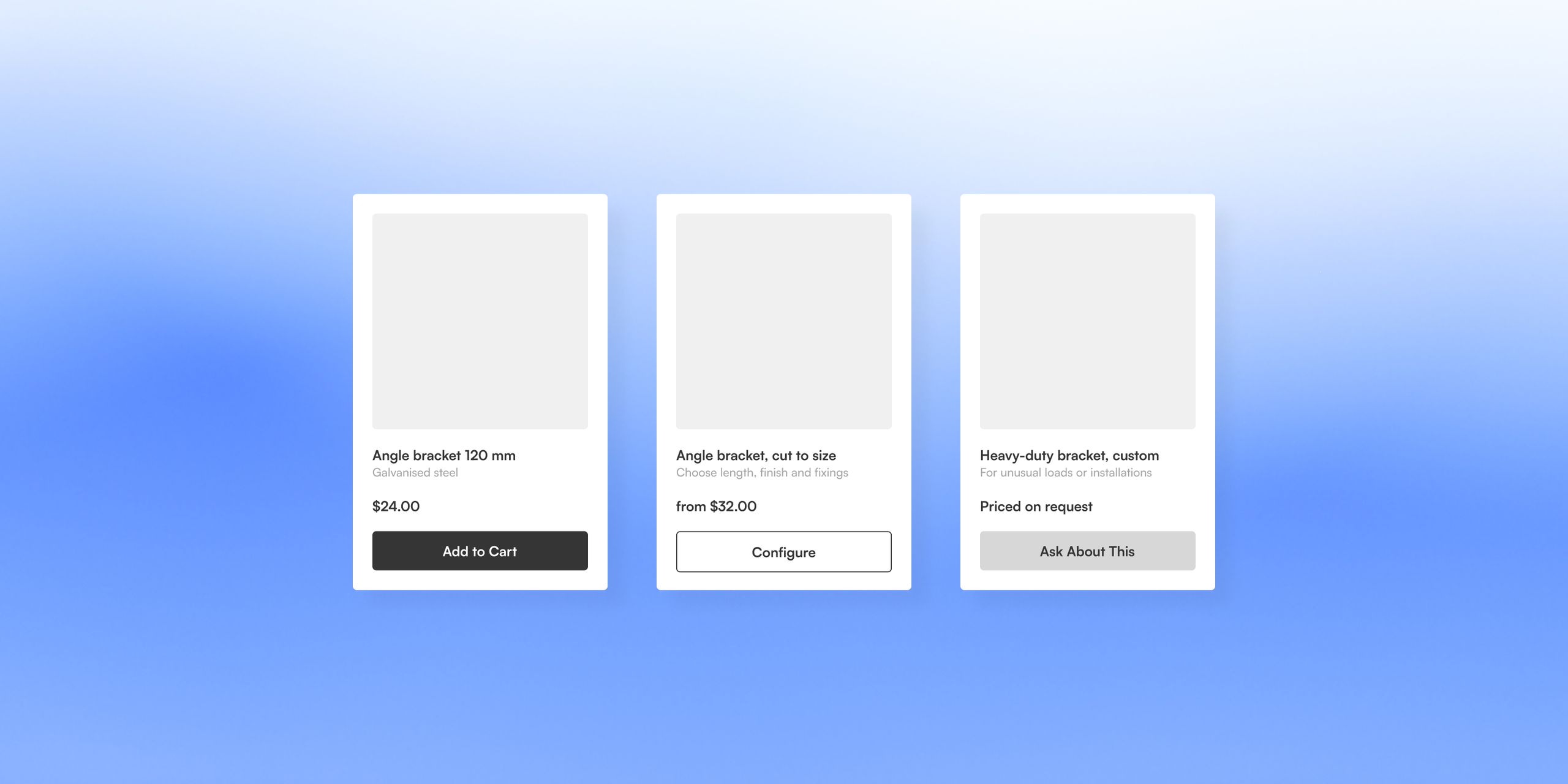
That’s where the question “Should we sell this online?” becomes too small. A website can help someone buy now, assemble a suitable solution or arrive at a much better conversation with your team. The commercial opportunity is deciding how far each purchase can sensibly move online, without leaving the customer to bridge the gaps.
A product listing isn’t always enough to make a sale
Consider two people looking at the same component. One is replacing a part they order every year; the other is trying to work out whether it will fit an existing system. The first wants the quickest route to availability and checkout. The second needs reassurance about compatibility. Neither is using the website incorrectly, but a page built for only one of them will make the other work harder.
For the uncertain buyer, useful information is part of selling. A clear specification, a compatible accessory or a diagram may answer the question that stands between interest and an order. If those details live in someone’s inbox instead of on the product page, the website can attract the customer without helping them take the next step.
Some purchases need a conversation worth having
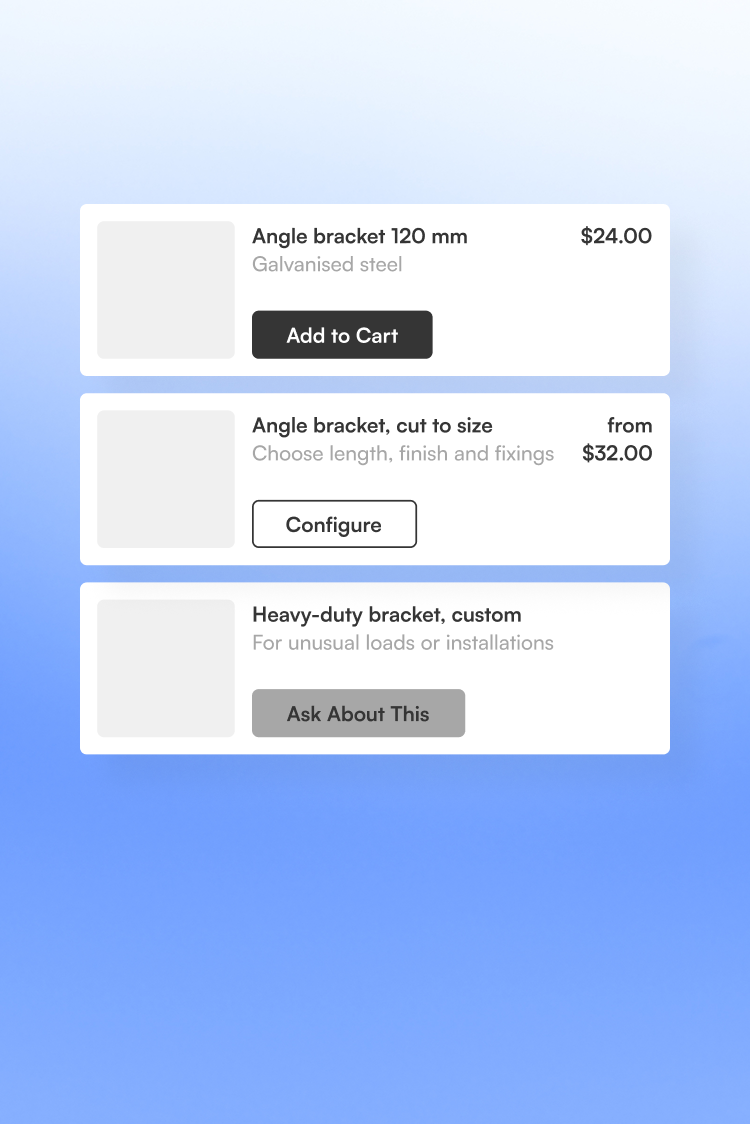
There are decisions you can explain on a page and decisions that still need judgement. Choosing from supported sizes is different from asking whether a product will work in an unusual installation. When you treat both as simple dropdowns, an apparently successful online order can become a phone call to correct what the customer thought they were buying.
The answer isn’t to put a vague ‘Contact us’ button on every complicated item. An assisted buying route should do some useful work before the conversation starts: explain who the product is for, show the information that matters and help the customer describe what remains unresolved. Your team can then begin with the actual requirement instead of repeating the basics.
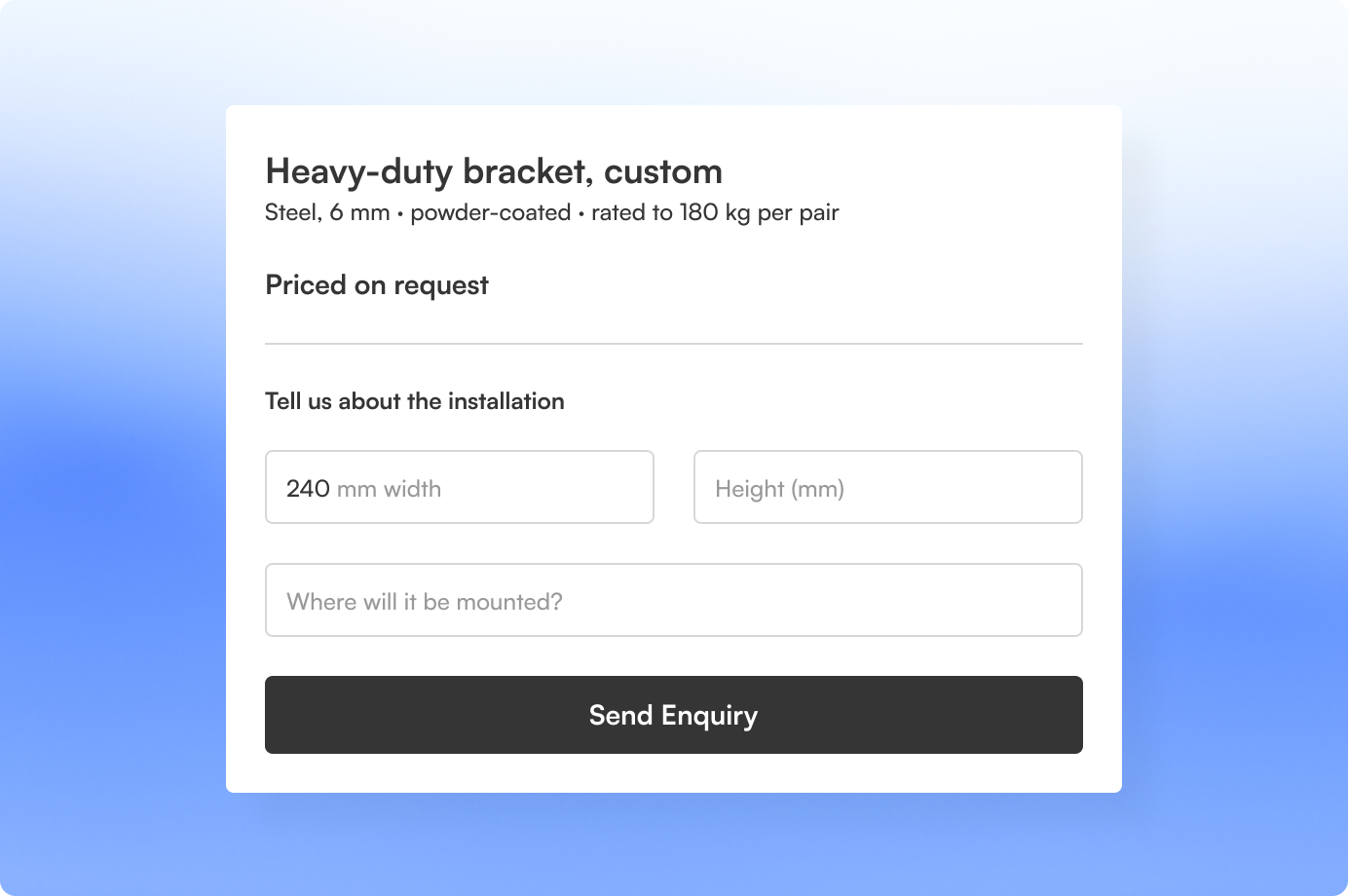
That can make an inquiry a valuable outcome of the visit. A buyer who sends dimensions, intended use and a relevant product reference has made progress, even if no payment has changed hands. The website has helped them think through the purchase and given your sales team a more informed starting point.
Some businesses also need a more personal route because of how they sell, rather than how complicated the product is. A stylist’s selection, a trade account or a private offer may belong in a controlled buying experience. Digital selling can support that relationship without making the entire range a public, self-service catalogue.
The promise has to survive the order
The route you offer also needs to make sense to the people supplying the product. A customer may be ready to pay while your team still needs to confirm freight, configuration or availability. Accepting the order first can move the uncertainty into customer service, where it is usually a less comfortable conversation.
Be clear about what is being agreed at each stage. If delivery needs confirmation, say so while the buyer is deciding. If a configuration needs review, make the request useful and explain what follows. Customers don’t need every purchase to be instant; they do need to understand where they stand.
Look for the sale beyond the checkout report
A catalogue with both direct and assisted purchases needs more than one definition of progress. For straightforward products, completed orders matter, along with the corrections and support they require. For assisted purchases, look at whether enquiries are relevant and whether they become worthwhile orders. A product page that starts a good sales conversation can be doing its job.
You can also learn from the questions that keep coming back. If staff give the same answer repeatedly, the website may be able to carry more of the purchase next time. If every order reveals a different requirement, the more valuable improvement may be a better enquiry experience. Neither decision has to apply to the whole catalogue.
So before asking how to put more products into checkout, ask what would help more customers move forward. Sometimes that will be a faster purchase. Sometimes it will be enough clarity to get in touch. A good catalogue makes room for both and gives your team fewer orders to untangle.
We’ve Done This Before

Vestis Fashion Group
Custom Shopify 2.0 private clienteling platform — empowering in-store stylists to deliver luxury shopping experiences digitally.
View Case Study
Barr Plastics
Shopify 2.0 B2B rebuild with custom quoting tools, streamlined product discovery, and UX redesign for an industrial supplier.
View Case StudyWhere do your customers get stuck?
Bring us the products that are hardest to sell through your current site. We can help shape the information, configuration or enquiry experience around what buyers need to move forward.