The cheat sheet
- The cost of a fixed layout theme includes the ideas your team stops pursuing.
- Useful editing choices follow real campaign tasks.
- A focused improvement may be more useful than a full rebuild.
Somewhere in your marketing team’s chat history, there may be a perfectly good idea that ended with, “Let’s leave it until the next website update.” Perhaps it was a landing page for a new collection, a better way to show products together or a timely offer that needed more than a banner. Nobody decided the idea was bad. Getting it onto the site simply felt like too much work.
That’s a frustrating position for a business to be in. You’ve invested in products, photography and a team that understands your customers, yet the website can still determine which ideas see daylight. A useful Shopify theme should give that team room to work, with development focused on new capabilities rather than the same content changes every month.
More settings won’t necessarily give you more freedom
More settings won’t necessarily give you more freedom
Shopify’s sections and blocks can make content easier to change, but the choices available depend on the theme. A page with dozens of controls can still be hard to use if nobody knows which combination produces a good result. Freedom to edit only helps when the person doing the editing can recognise the task in front of them.
Think about a familiar campaign: introduce the collection, show the products in use, explain the offer and give the customer somewhere to go. The editor should make that sequence feel straightforward. A marketer shouldn’t have to become a part-time page designer just to tell a different story.
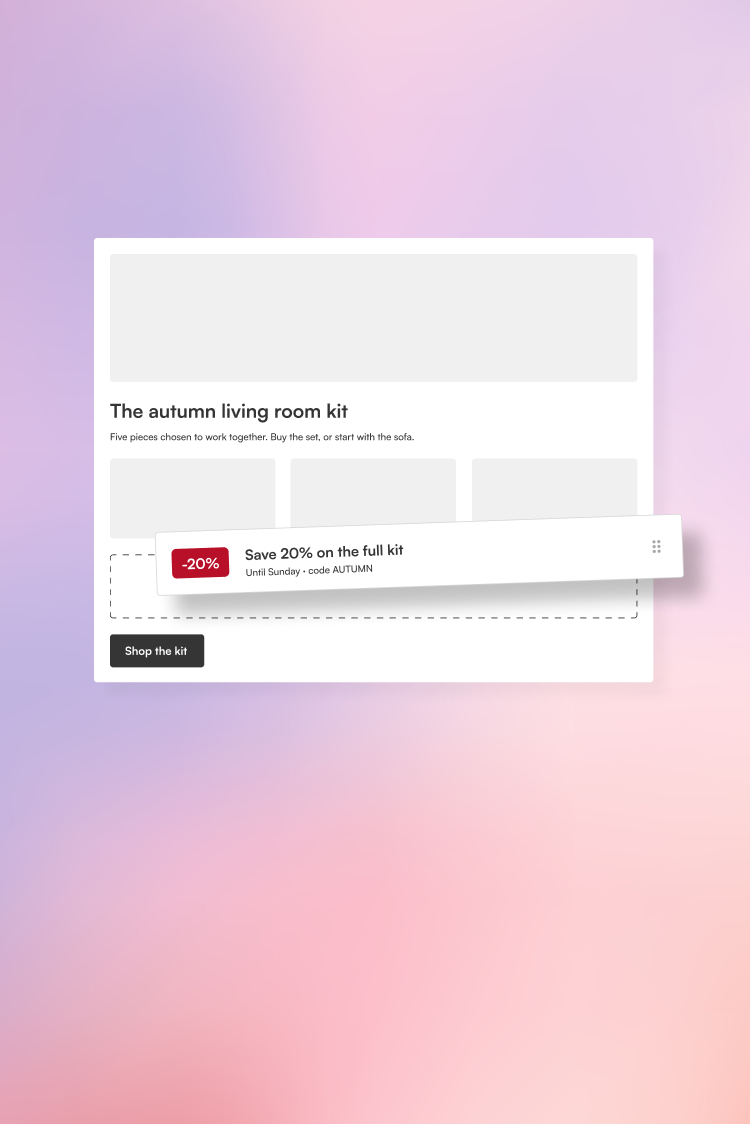
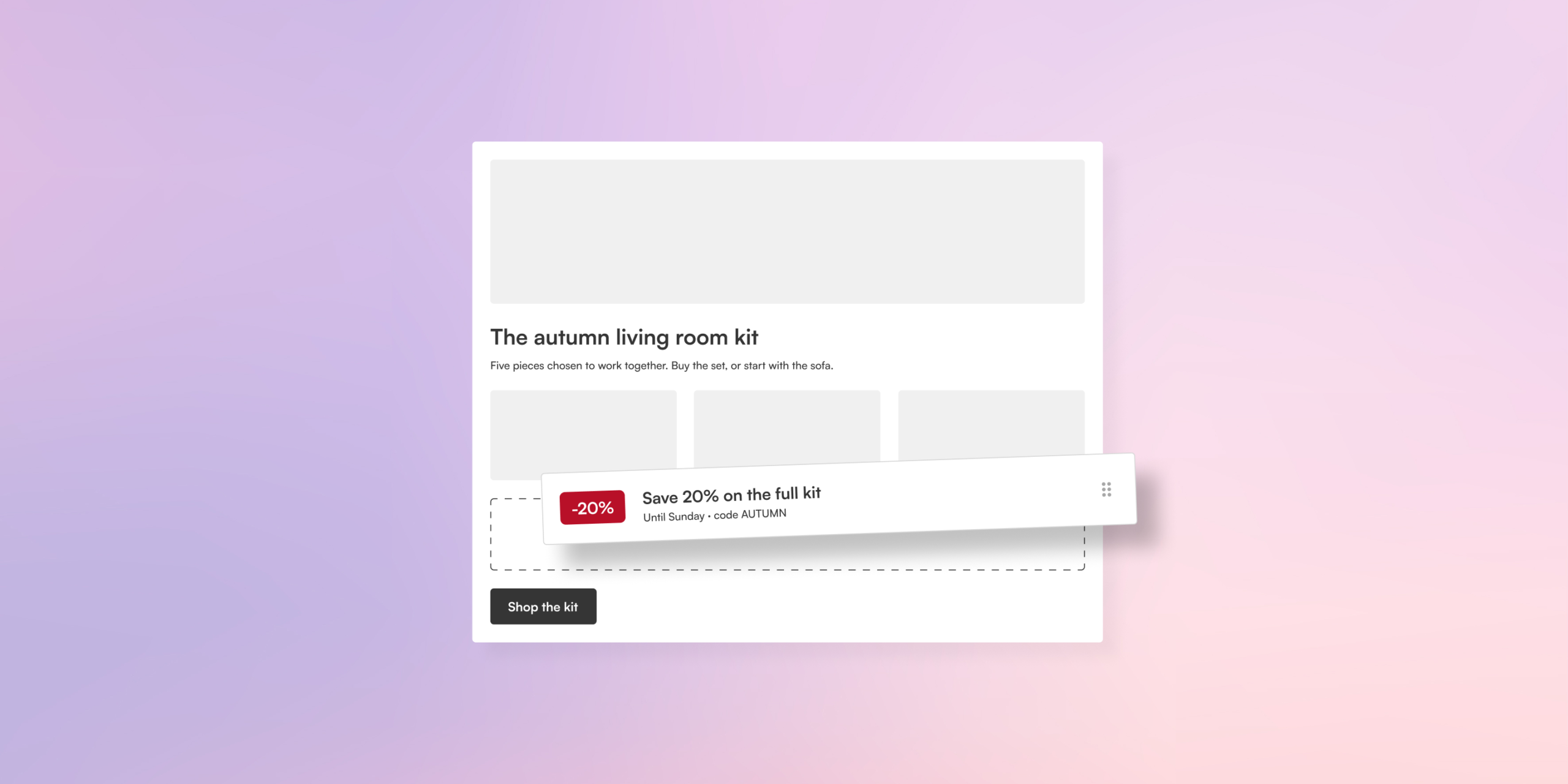
A reusable collection feature, for example, could bring together the image, introduction and product selection in a layout that already works on mobile. Next time, the team changes the content rather than negotiating the structure again. The design effort still matters; it has been invested in something the business can use repeatedly.
The same applies before and after the promotion. A coming-soon page has a different job from a live collection, and an expired offer needs a sensible destination. When the theme only accounts for the launch-day screenshot, those less glamorous moments become someone else’s problem later.
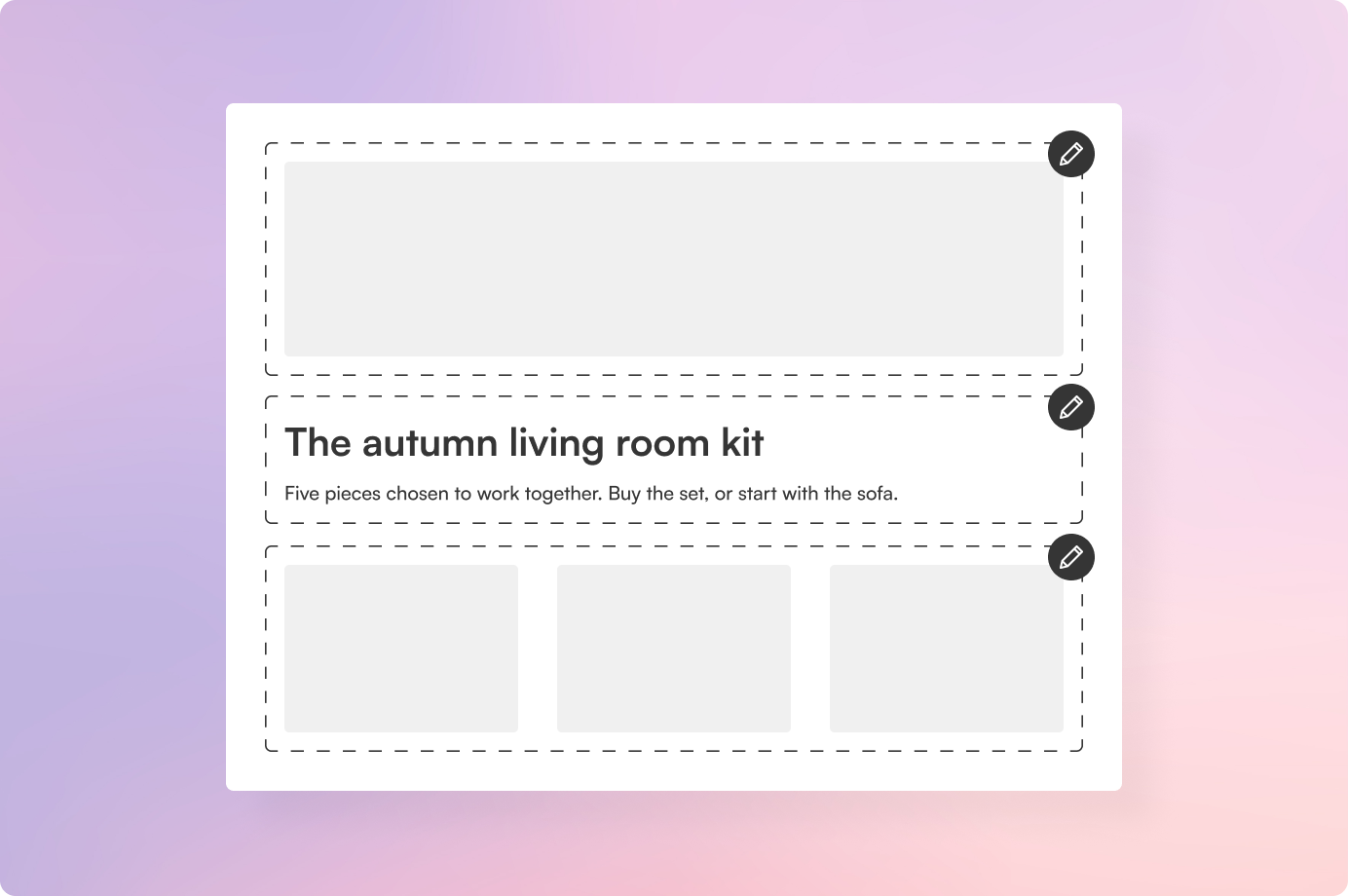
The useful question is whether your team can run the campaign from beginning to end. If a normal update repeatedly needs outside help, find out where the work gets stuck: an unavailable layout, confusing controls, missing product data or an approval nobody owns. Each points to a different fix.
Let ordinary content into the design review
A polished mockup is a forgiving test. Its headline is the right length, the photographs share a crop and every product has exactly the information the designer expected. Your next campaign probably won’t be that cooperative. One image will be portrait, the offer will need another line and someone will want to feature three products where the design shows four.
That’s why a real campaign is such a useful rehearsal. Let the person who will maintain the page build it with actual assets and preview it on a phone. You’ll learn more from the places they hesitate than from a tour of the theme settings. Clear image guidance and sensible limits make those everyday variations easier to handle without losing the design.
Give your team something it can use next week
Give your team something it can use next week
You may not need a full rebuild. If one missing section causes most of the trouble, that’s a focused development problem. If nobody knows who approves the offer, another theme won’t settle it. And if the campaign introduces a new pricing rule or system connection, it deserves proper technical work; calling it a content update won’t make the complexity disappear.
Start with the change your team keeps postponing and make that easier. Then watch what happens to the waiting, the back-and-forth and the amount of help a similar campaign needs. Those are tangible signs that the investment is doing its job, before you try to connect it to sales.
The next useful idea should get a fair hearing because it might interest your customers. When the website is easier to work with, the conversation can return to the offer, the story and the timing—rather than ending with a discussion about whether anyone has time to build the page.
We’ve Done This Before

Below The Belt
Shopify 2.0 redesign with dynamic bundles, editorial storytelling, and geolocation-powered promo badges for a streetwear retailer.
View Case Study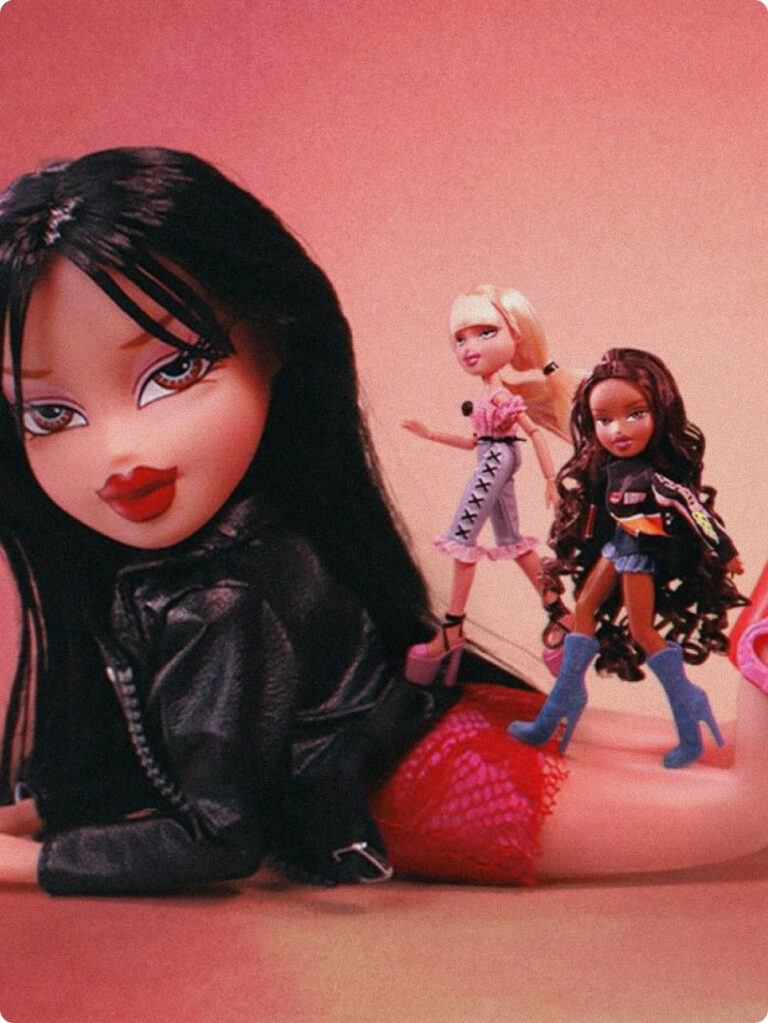
Bratz
Mobile-first Shopify 2.0 storefront for a cultural icon — vibrant Gen Z design with high-performance commerce features.
View Case StudyWhat would your team change first?
Bring us the campaign idea your website keeps putting off. We’ll help you work out whether better sections, a clearer editing experience or a more substantial theme change would give it room.